What Size Dumpster for a Kitchen Remodel? (Cabinets vs Tile vs a Full Gut)
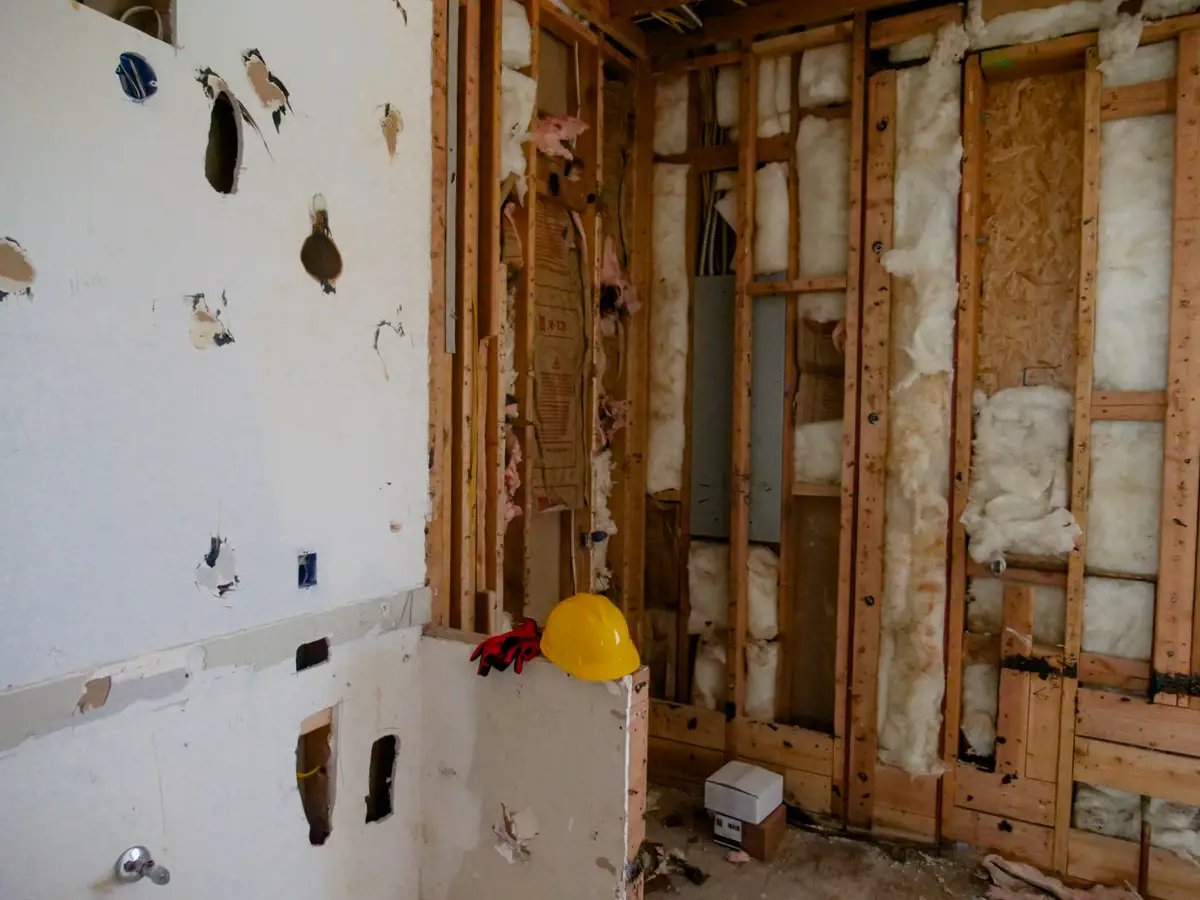
Cabinets eat volume. Tile, mortar, and granite eat weight. Partial update vs full gut is why the internet says 10, and 20, and 30.
A kitchen dumpster is a volume problem until it is a weight problem. Hollow cabinet boxes, laminate counters, and a dishwasher fill the box with air. Ceramic tile, thinset, a granite slab, and a mortar bed fill it with tons.
That is why live charts do not agree. Dumpsters.com, on the same site, points at a 12-yard, a 15-yard, and a 20-yard. Hometown’s November 2025 size guide says a 10-yard “may be appropriate” for a small kitchen remodel. Angi says 20 or 30. Hometown’s own kitchen pages, fetched the same day, do not even agree with each other.
This page is the dedicated kitchen-debris URL. It is not a zip-code form, and it is not a reprint of the 10-vs-20 driveway fight. Where live pages disagree, the disagreement is the point. Every number below is that publisher’s, dated to the fetch. Do not treat any row as the national size.
If two quotes landed on a 10 and a 20 because of driveway length, that is 10-yard vs 20-yard. If you need the full 10/15/20/30/40 household map, that is What size dumpster do I need?.
What actually comes out of a kitchen
Name the pile. Then decide whether it is space or tons.
| What comes out | Volume or weight | Why it matters |
|---|---|---|
| Cabinet boxes, doors, drawers | Volume | Hollow wood and particleboard. Hometown’s dedicated kitchen page (updated March 7, 2024): cabinet boxes “can take up quite a bit of space” and “weigh anywhere from 50–200 lbs on average” — their range. Break them down or they eat a 10-yard as air. |
| Laminate / butcher-block counters | Volume | Bulky, not dense. Dumpsters.com’s 10-yard page lists “installing new kitchen countertops” as a 10-yard job. |
| Granite, quartz, stone slabs | Weight | A slab does not look like much on the floor of a 20-yard. It is the scale that notices. Hometown’s renovations guide (updated November 18, 2025): “Don’t assume volume equals weight. Heavy debris like concrete, stone, or tile can quickly reach weight limits.” |
| Tile, thinset, mortar, backer board | Weight | Same lesson as a roof, in a smaller room. A 20-yard that still has daylight can already be over a 2-ton cap. |
| Vinyl, laminate, hardwood flooring | Mostly volume | Until it is tile or stone on a mortar bed. Then it is weight. |
| Drywall, plaster | Volume first, weight if wet | Light when dry and broken down. Wet plaster and stacked sheets add tons. |
| Appliances (range, dishwasher, fridge, microwave) | Volume, plus rules | Hometown kitchen page: microwave “28 lbs on average,” refrigerator “420 lbs on average” — their figures. The fridge is a Freon problem before it is a yard problem. See appliances below. |
| Sink, faucet, garbage disposal | Small volume | Cast iron is the sleeper on weight. Stainless is not. |
| Adjacent walls, island, subfloor | Both | This is how a “kitchen” becomes a 30-yard on Angi. Framing and masonry change the job. |
No live page fetched for this draft publishes a reliable cubic-yard table of “X yards of cabinets.” Town Bins had one; that URL is still 404. Hometown’s kitchen page does publish one worked example: a kitchen 15 feet by 10.5 feet taken down to the studs is, in their words, “roughly 150 square feet of debris, which equates to 12.5 cubic yards.” That is Hometown’s conversion, March 7, 2024, not a tape measure from this page. Frontier Waste Solutions (Dallas–Fort Worth; February 6, 2026) publishes their own bands: small remodels 4–8 cubic yards; moderate tear-outs 15–25; full gut and layout changes 30–40+. Same job type. Different arithmetic. Shown, not averaged.
If a hauler asks what you are throwing, answer with the list above, not “a kitchen.”
What companies actually say (not a blended size)
These are live recommendations. They are not averaged. Read down the column, then notice the fight.
| Source (fetched Aug 30, 2026) | Their kitchen box | What they actually wrote |
|---|---|---|
| Dumpsters.com size chart | 15-yard “best for” | “Medium cleanouts, kitchen remodels.” Typical included weight on that chart: 1–2 tons. |
| Dumpsters.com “what size” page | 12-yard | “Remodeling your kitchen or removing flooring from a master bedroom? A 12 yard dumpster has the space you need.” |
| Dumpsters.com 15-yard product page | 15-yard | “Kitchen renovations” under light construction. Typical included weight on that page: 1–2 tons. |
| Dumpsters.com “what size” FAQ | 20-yard for large kitchens | “For large kitchen remodels, a 20 yard dumpster typically works well.” Bathroom: “usually” 10 or 15. More extensive remodeling: 30. |
| Dumpsters.com sizes-page FAQ | 20-yard | “For a kitchen remodel, most people choose a 20 yard… old cabinets, countertops, flooring and appliances from a full kitchen tear-out.” |
| Dumpsters.com 10-yard product page | 10-yard | “Installing new kitchen countertops.” Also: half bathroom, living-room flooring. |
| Hometown ultimate guide (updated Nov 10, 2025) | 10-yard | A 10-yard “may be appropriate” for a small kitchen remodel and a bathroom renovation. Typical allowance on that chart: 10-yard 2–3 tons; 20-yard 2–4 tons. Their 20-yard row does not list kitchen. |
| Hometown kitchen-size page (updated Mar 7, 2024) | 10 / 20 / 30 / 40 | 10-yard: “ideal for small kitchen remodels.” 20-yard: “medium kitchen remodels, or a small kitchen remodel along with additional junk.” 30-yard: “larger kitchen remodels or projects with substantial waste.” 40-yard: “major kitchen remodels.” Typical included weight on this page: 10-yard 2–3 tons; 20-yard 3–5 tons. That 20-yard tonnage does not match their November 2025 chart (2–4). Keep both. |
| Hometown kitchen-demo guide (updated Feb 19, 2023) | 10-yard, sometimes 20 | “The debris generated from most kitchen renovation projects can be handled by a 10 yard dumpster. Larger kitchens, or projects that involve taking down walls and removing flooring, may require a 20 yard.” |
| Hometown renovations guide (updated Nov 18, 2025) | 15–20 yard | Project table: “Kitchen renovation — 15-20 yard dumpster. Can handle cabinets, countertops, and appliances.” Bathroom on that table: 10-yard. |
| Hometown “10 tips” kitchen post (updated Dec 6, 2022) | 10 or 20 | “A 10 yard roll-off or 20 yard roll-off dumpster is ideal for most kitchens.” A 20 “has the capacity to hold kitchen cabinets, countertop, drywall, flooring and appliances.” |
| Hometown 10-yard weight page (updated Oct 2, 2025) | 10-yard, as weight | “Remodeling a bathroom, small kitchen, or a single room often produces 1.5 to 2 tons of waste, including drywall, cabinetry, flooring, tiles, and countertops.” Their estimate. |
| Angi, “What Size Dumpster Do I Need?” | 20 or 30-yard | Project table on that URL: kitchen remodel 20 or 30-yard. Bathroom 15 or 20. Direct fetch blocked by Cloudflare this pass; table taken from indexed excerpts of that same URL. |
| Frontier Waste Solutions (Feb 6, 2026; DFW hauler) | 20-yard typical full; 10–15 small; 30+ structural | “You can usually cover a typical full kitchen remodel with a 20-yard dumpster; smaller updates may fit a 10–15 yard, and large kitchens or projects with structural demo often require a 30-yard or larger.” Their volume bands: small 4–8 cy; moderate 15–25 cy; full gut 30–40+ cy. Local page. Their math, not a national table. |
So a kitchen, on live pages, spans 10, 12, 15, 20, 30, and 40. Dumpsters.com alone occupies 10, 12, 15, and 20. Hometown occupies 10, 15–20, 20, 30, and 40, depending on which of their URLs you opened. Angi starts at 20 and goes to 30.
That is not sloppiness. A cabinet-and-counter swap is mostly bulky wood. A gut-to-studs kitchen with tile floors, mortar, and a granite slab is a weight problem wearing a volume costume.
Do not pick a winner from the table. Ask the hauler which row they are living in, and what tons are in that box.
Partial update vs full tear-out vs gut plus masonry
Practical read, tied to the named sources. Not a slogan, and not an average of 10/20/30.
Partial update — counters, or cabinets only
This is the 10-yard end of the range.
Dumpsters.com’s 10-yard page literally lists “installing new kitchen countertops.” Their 12-yard product page lists “replacing old countertops.” Hometown’s November 2025 guide is describing a small kitchen remodel when it says a 10-yard “may be appropriate.” Hometown’s March 2024 kitchen page: if you are not removing cabinet boxes or appliances, “your debris footprint will be much smaller and you can likely get away with a smaller dumpster.”
A laminate swap and a few box cabinets, broken down, is volume you can see. It is also the job that still fits a short driveway. If the new counters are stone and the old ones are stone too, you just added a weight problem to a “small” job. Say so.
Full tear-out of a standard kitchen
Cabinets, counters, flooring, appliances. Volume first, unless the floor is tile or the counters are stone.
Dumpsters.com’s sizes FAQ is the center of gravity here: “most people choose a 20 yard” for a full kitchen tear-out. Their “what size” FAQ says the same for large kitchen remodels. Hometown’s December 2022 tips post: a 20 holds cabinets, countertop, drywall, flooring, and appliances. Hometown’s November 2025 renovations table: kitchen = 15–20. Frontier (their page, February 2026): typical full remodel = 20.
That is four publishers pointing at 20 for a full tear-out — and Hometown’s 2023 demo guide still saying most kitchens are a 10. The fight is “how full is full,” not a measurement error.
If the hauler’s 20-yard only includes 2 tons, keep reading. Extra airspace is not extra legal payload.
Gut plus masonry, walls, or the next room
This is why 30 is on the table.
Angi: kitchen remodel 20 or 30. Hometown’s March 2024 kitchen page: 30 for larger kitchens or “substantial waste”; 40 for major. Frontier: structural demo and large open-plan kitchens often 30 or larger; their full-gut band is 30–40+ cubic yards. Dumpsters.com’s remodel FAQ: more extensive remodeling → 30.
Islands, a wall into the dining room, a mortar bed, a brick soffit, a concrete island base. Those are not “a few more cabinets.” They are why Angi will not stop at 20.
Hometown’s November 2025 size guide, still live: if you squeeze into a too-small box, the worst case is paying for two dumpsters and “instantly doubling your intended budget.” Then, in their words: “On average, sizing up costs less than $100 and can easily save you money in the long run.” That is Hometown’s claim, dated to that guide, about stepping up one size at booking. It is not a national tariff, and it is not an overweight fee.
Dumpsters.com’s answer if the box is too small: empty-and-return (swap), or order more than one. Ask what that swap costs here before you “save” on a 10-yard.
Appliances, Freon, and what cannot go in the box
A fridge is not a cabinet.
Dumpsters.com prohibited-items page (fetched August 30, 2026):
- Never in their box, on that list: vehicle batteries, lithium batteries, tires, hot water tanks, inks and resins, railroad ties, wet paint and lacquers, fluorescent bulbs, Freon-bearing appliances unless the refrigerant is recovered, household chemical cleaners, oils/fuels/propane, telephone poles, adhesives, and hazardous waste generally.
- Restricted, varies by market: mattresses, some appliances, electronics, tree stumps, dirt, food waste, yard debris.
- Refrigerators, freezers, and AC units: cannot go in “unless a professional removes the Freon.”
- Their 10-yard and 12-yard product pages: in some locations you can throw mattresses, electronics, and appliances, sometimes with a fee. Their 15-yard page: small household appliances are usually fine; refrigerators, freezers, and air conditioners “often contain refrigerants and require special disposal.”
Hometown kitchen-demo guide (February 19, 2023, still live): some companies will not take appliances, or they charge extra, “most often… refrigerators due to the presence of freon.” Their November 2025 renovations guide lists paints, solvents, tires, electronics, and appliances as often prohibited.
Bagster refuses appliances and electronics outright. Official product-specs page (fetched August 30, 2026): unacceptable list includes appliances, electronics, water heaters, water softeners, paint, oil, batteries, fluorescent bulbs, tires, food waste, railroad ties, propane, fuel, liquids, medical waste, asbestos, chemicals. Accepted examples on that same page include cabinets, a bathtub, tile, flooring, drywall, sinks, toilets, plywood. The bag will take the cabinet. It will not take the fridge.
If a prohibited item is in a roll-off, Dumpsters.com says they may refuse pickup (trip fee) or the landfill may add a prohibited-item fee. If it is in a Bagster, WM will not collect, and extra fees may apply.
Practical read for a kitchen:
- Range and dishwasher: ask. Many roll-offs take them in some markets, sometimes with a fee.
- Refrigerator / freezer / window AC: Freon recovery first, or a different pickup. Not a surprise you load on Friday.
- Hot water heater (if the kitchen shares one, or you are moving a line): Dumpsters.com says never in the box.
- Wet paint, solvents, leftover adhesive, batteries from a junk drawer, fluorescent under-cabinet tubes: out.
- The local list wins. Ask for the list that applies to this load.
Why a 20-yard with a 2-ton cap is the wrong box for a tile-and-granite gut
Bigger is not safer when the debris is dense.
Dumpsters.com’s size chart (fetched August 30, 2026): typical 20-yard included weight 2–3 tons. Their 20-yard product page, same day: average 2–3 tons (4,000–6,000 lb); later on that page, a more common included limit is 2–4 tons, and “most 20 yard dumpsters can handle up to 10 tons” for heavier debris. Those are three products that share a stencil. The contract is the included tons.
Now look at the 15-yard they also recommend for kitchens: 1–2 tons on the size chart and on the 15-yard product page. A 15-yard of tile and mortar with a 1-ton cap is a half-empty expensive box.
Hometown, same week of fetches:
- November 2025 size guide: typical 20-yard 2–4 tons.
- March 2024 kitchen page: typical 20-yard 3–5 tons.
- October 2025 10-yard weight page: a small kitchen often 1.5 to 2 tons of mixed drywall, cabinets, flooring, tiles, and counters.
A “small” kitchen at the top of Hometown’s 1.5–2 ton band already is a 2-ton cap. Add a granite slab and a mortar bed, and the 20-yard whose quote includes 2 tons is not the grown-up box. It is the one that still looks half empty when the scale says overage.
Dumpsters.com: going over the included limit is a pro-rated per-ton overage because landfills charge by the ton. Hometown’s November 2025 renovations guide: do not assume volume equals weight; stone and tile hit the limit fast.
Practical read, not a slogan:
- Cabinets and laminate: size the yards. A 20 is the Dumpsters.com “most people choose” answer for a full tear-out.
- Tile, thinset, granite, stone, a concrete island: size the tons first. Ask what is included in this rate for this debris. A 10-yard with a 3-ton cap can beat a 20-yard with a 2-ton cap.
- If they quote a 20 because “it holds more,” ask what tons are in that 20 for mixed C&D, and whether tile and stone change the cap. If two haulers disagree, they assumed different piles or different tons.
- Mixed household junk on top of masonry is how a cheap kitchen box becomes a contaminated load. Ask whether they want stone and tile in this box at all.
This is not the 14-foot vs 22-foot driveway argument. That lives on 10-yard vs 20-yard. This is weight wearing a volume costume.
Bagster: cabinets yes, fridge no, height 2'6"
Waste Management’s Bagster is one size. Official specs page and WM product page, fetched August 30, 2026:
- 3 cubic yards / 606 gallons (not 3.3)
- 8 ft × 4 ft × 2 ft 6 in
- 3,300 lb max
- At most 1 cubic yard of heavy materials (dirt, brick, rock, sod, concrete, sand, asphalt, plaster, stucco). WM will not collect a bag with more than one cubic yard of heavy debris.
- In some markets, tiles, roofing shingles, and drywall are also treated as heavy. The 1-yard cap still applies.
WM’s fill examples under 3,300 lb include 900 sq ft of carpet or tile and that same 1 cubic yard of heavy stuff. Cabinets and a bathtub are on the accepted list. Appliances are not.
The 2-foot-6-inch wall is the other constraint. A standing cabinet does not fit unless you break it down. A fridge does not go in at all.
Hometown’s kitchen-demo guide, still live: Bagster and bag-style dumpsters have “approximately 3 cubic yards of loading capacity. That’s not enough capacity to accommodate a kitchen demolition project and it would likely take three or more of these bags to complete the job.”
A real gut is the wrong product. A single laminate counter and a couple of broken-down boxes, in a market WM actually services, with a legal pad on your property, is the only kitchen-shaped pile that still looks like a bag. The comparison of shelf price vs a 10-yard is Bagster vs dumpster. This page will not redo that math.
Bathroom is a sibling, not a second article
Smaller room. Same tile-and-mortar weight problem. Less cabinet volume.
Live charts, short:
- Dumpsters.com remodel FAQ: bathroom remodels “usually require a 10 yard or 15 yard.” Their 10-yard page: half bathroom. Their 12-yard chart row: “bathroom remodels.”
- Hometown November 2025 guide: a 10-yard “may be appropriate” for a bathroom renovation. November 2025 renovations table: small bathroom = 10-yard (“tile, drywall, small fixtures”).
- Angi (indexed excerpts of the same dumpster-sizes URL): bathroom remodel 15 or 20-yard.
A bath is why 10 and 15 stay in the conversation. A kitchen is why 20 and 30 join them. If you are doing both rooms in one week, that is a mixed pile — Angi-sized, or two boxes, or a swap. Ask what tons they assumed for the tile.
What to ask the hauler
Get this in the quote. In writing if you can. None of it is a zip form.
- Included tons for this debris in this box. Not “the 20-yard.” Mixed C&D vs a tile-and-stone load can be different caps. Dumpsters.com’s own 20-yard page does not agree with itself (2–3 vs 2–4 vs a 10-ton safe max). Hometown’s 20-yard is 2–4 on one page and 3–5 on another.
- What they think you are throwing. Cabinets-and-laminate vs gut-plus-granite. If they will not say which row they are in, they are guessing at the same table you already saw disagree.
- Appliances, one by one. Range, dishwasher, fridge, microwave, window AC. Freon recovery — who does it, and is the fridge even allowed after. Hot water tank: Dumpsters.com says never.
- Overage per ton. Pro-rated? Rounded up? Dumpsters.com: pro-rated after the scale. Ask what here charges.
- Whether tile, mortar, and stone change the product. Separate heavy-debris box, or fill-partway rules, or a different rate.
- Swap / empty-and-return. Dumpsters.com’s answer if the box fills: swap, or order another. Ask what that costs here before you “save” on a 10-yard. Hometown’s still-live November 2025 claim: sizing up at booking averages less than $100 — their figure, about booking, not overweight.
- Prohibited list for this landfill. Paint, batteries, Freon appliances, e-waste, food, wet adhesive. If a prohibited item is in the box, pickup can fail and still cost you.
- The actual L × W × H of the box they will drop, and whether it has a door you can walk a range through. Yard number does not lock length. This page will not reprint the 14-foot vs 22-foot driveway fight; that is 10-yard vs 20-yard.
- Rental days and extra-day rate. Demo is often a few days. The new cabinets arriving late is why you still ask.
- Whether this market treats tile as heavy. Matters for Bagster’s 1-yard cap. Matters for whether they will put a mortar bed in a 20- or 30-yard.
If two haulers recommend different sizes, ask each what tons they assumed and whether they counted the fridge. That usually ends the argument.
Related
- What size dumpster do I need? — cubic yard vs ton, the full 10/15/20/30/40 chart, cleanout, concrete. Kitchen math lives here in more detail; that page is the household map, this one is the kitchen URL.
- 10-yard vs 20-yard dumpster — volume vs driveway length vs included tons when you got both sizes quoted. Not a kitchen reprint, and not the 14-ft vs 22-ft section again.
- Bagster vs dumpster — if the pile is actually a couple of broken-down cabinets and you are staring at a store-shelf bag. Shelf price is not the job. Appliances are banned in the bag.
- What size dumpster for roof shingles? — if the kitchen is done and the roof is next. Squares × layers × shingle type, not “always 20.”
Sources
Fetched August 30, 2026 unless a page carries its own date. Kitchen sizes and debris volumes are those publishers’ figures, not a blended national rate.
Dumpsters.com (live page body)
- What size dumpster do I need? (12-yard kitchen copy; FAQ: large kitchen typically 20; bath 10 or 15) — https://www.dumpsters.com/resources/what-size-dumpster-do-i-need
- Dumpster sizes (15-yard “best for” kitchen remodels; FAQ: most people choose 20 for a full tear-out) — https://www.dumpsters.com/sizes/dumpster-sizes
- 10-yard product page (installing new kitchen countertops; typical 2–3 tons average / 1–2 on the size chart) — https://www.dumpsters.com/sizes/10-yard-dumpster
- 12-yard product page (replacing old countertops; 1–2 tons typical) — https://www.dumpsters.com/sizes/12-yard-dumpster
- 15-yard product page (kitchen renovations; 1–2 tons) — https://www.dumpsters.com/sizes/15-yard-dumpster
- 20-yard product page (2–3 tons average; 2–4 more common; up to 10 tons for heavier debris) — https://www.dumpsters.com/sizes/20-yard-dumpster
- Prohibited items (Freon-bearing appliances unless recovered; hot water tanks never; appliances restricted by market) — https://www.dumpsters.com/resources/prohibited-items
- Weight calculators (included-ton bands by size; no kitchen-specific debris table on this URL) — https://www.dumpsters.com/resources/dumpster-weight-calculator
Hometown Dumpster Rental (live page body)
- “What Size Dumpster Do I Need for a Kitchen Remodel?,” updated March 7, 2024 (10/20/30/40; 15×10.5 → 12.5 cy example; cabinets 50–200 lb; fridge 420 lb; 20-yard typical 3–5 tons) — https://www.hometowndumpsterrental.com/blog/what-size-dumpster-do-i-need-for-a-kitchen-remodel
- “Kitchen Demolition Debris Disposal Guide,” updated February 19, 2023 (most kitchens 10-yard; larger / walls / flooring 20; Bagster ~3 cy not enough; Freon note) — https://www.hometowndumpsterrental.com/blog/kitchen-demolition-debris-disposal-guide
- “Dumpster Rental for Home Renovations,” updated November 18, 2025 (kitchen 15–20; bath 10; stone/tile weight warning) — https://www.hometowndumpsterrental.com/blog/dumpster-rental-for-home-renovations
- “Time to Renovate the Kitchen: 10 Tips,” updated December 6, 2022 (10 or 20 for most; 20 holds cabinets, counters, drywall, flooring, appliances) — https://www.hometowndumpsterrental.com/blog/time-to-renovate-the-kitchen-10-tips
- “The Ultimate Guide to Dumpster Sizes,” updated November 10, 2025 (10-yard “may be appropriate” for a small kitchen; sizing up “less than $100”) — https://www.hometowndumpsterrental.com/blog/the-ultimate-guide-to-dumpster-sizes
- “How to Choose the Right Size Dumpster,” updated March 2, 2023 (lists 15-yard as a common size; thin on kitchen) — https://www.hometowndumpsterrental.com/blog/how-to-choose-the-right-size-dumpster
- “How Much Does the Waste in a 10 Yard Dumpster Weigh?,” updated October 2, 2025 (small kitchen often 1.5–2 tons) — https://www.hometowndumpsterrental.com/blog/how-much-does-waste-in-10-yard-dumpster-weigh
Frontier Waste Solutions (live page body; local DFW, their figures)
- “What Size Dumpster Do I Need for a Kitchen Remodel?,” February 6, 2026 — https://frontierwaste.com/resources/dumpser-size-kitchen-remodel/
Angi (search-indexed excerpts of a blocked URL)
- “What Size Dumpster Do I Need?” — https://www.angi.com/articles/dumpster-sizes.htm — Cloudflare blocked a direct fetch this pass. Project table (kitchen 20 or 30-yard; bathroom 15 or 20) taken from indexed excerpts of that same URL. $300–$480 band on that URL is not used as a rate here.
Bagster / WM (official specs)
- WM Bagster product page (3,300 lb fill examples, including 900 sq ft of tile) — https://www.wm.com/us/en/home/bagster
- Bagster size, capacity, accepted/unacceptable (cabinets and bathtub accepted; appliances banned; some markets treat tile as heavy) — https://thebagster.com/products/products_services.aspx
Attempted, not used as a numeric source
- https://www.townbins.com/blog/what-size-dumpster-kitchen-remodel — 404 again. Cached debris-volume table not used.
- Bagster FAQ (
questions_answers.aspx) — fetch timed out this pass. Specs taken from the live product-specs page and WM page (same official figures used on prior drafts: 3 cy / 606 gal, 3,300 lb, 1-yard heavy cap, 2 ft 6 in).